The Better Version of Nice: Inside CEO David Ricks’ Leadership Philosophy at Eli Lilly
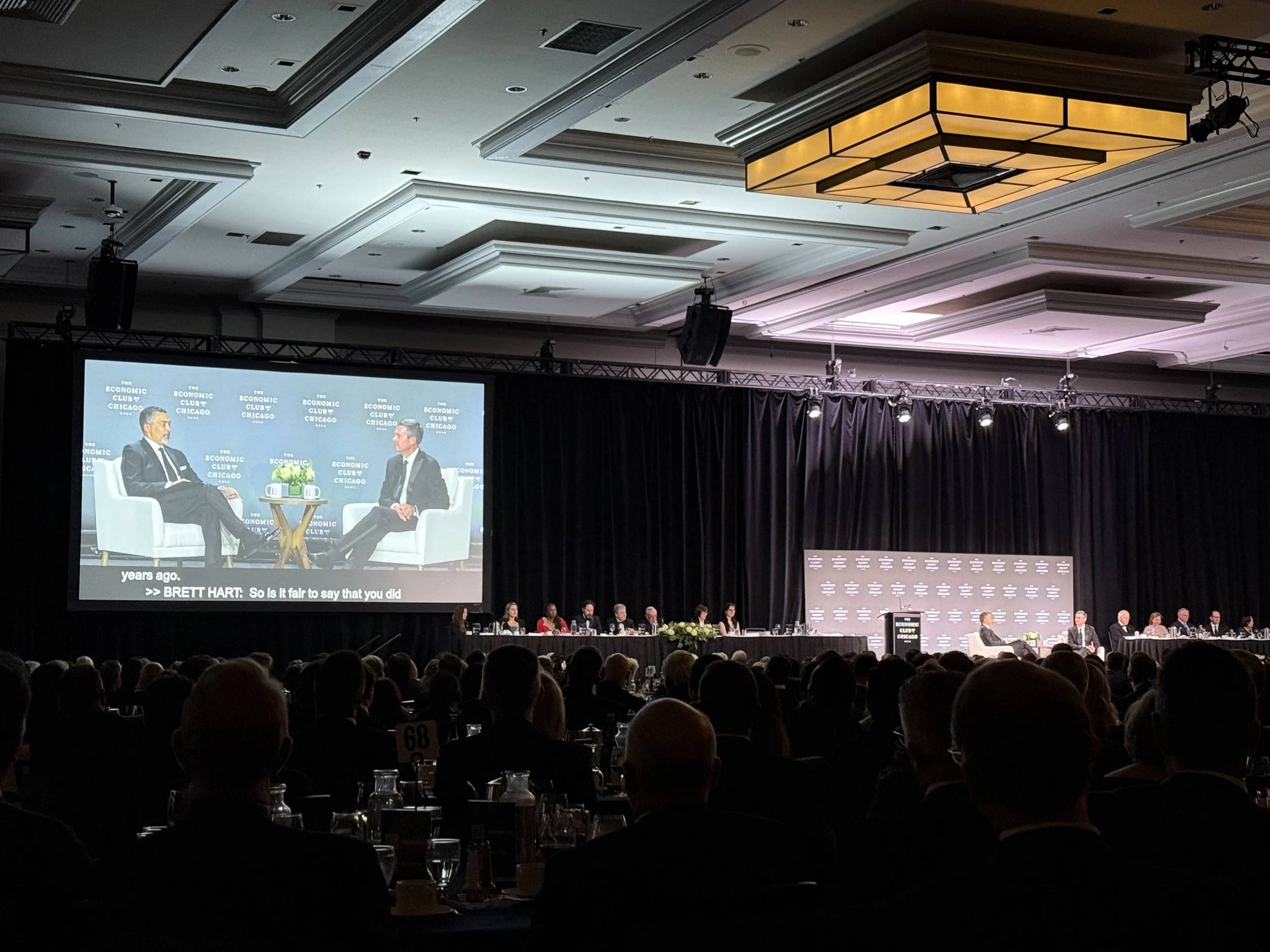
Last night’s Economic Club of Chicago event, a conversation between Eli Lilly CEO Dave Ricks and United Airlines President Brett Hart, was a masterclass in leadership and innovation.
From culture and change to R&D scale and AI, Ricks shared candid insights on what it takes to lead at one of the world’s most consequential companies. Here were some of our favorite takeaways:
On Driving Change
“I think when you're in the CEO job, a lot of my peers, they kind of get tired of talking about the change agenda. But I think you have to be completely relentless and pretty focused, talking about two or three things all the time until it's true. My lesson though is that the words matter, but not that much. What matters is what you do. What and who you pay attention to.”
On R&D
“We'll spend $14 billion on R&D this year, which is really at the nation state level. Total NIH is $40 billion. So we're like a third of that. We have more than 4,000 PHDs doing research. That's more than MIT or Harvard. We do real science. We do it at scale and I think that's very important to who we are.”
On Careers
“I didn't have a master plan. It wasn't until 14, 15 years ago, that I even thought of being Lily CEO. I think that's sort of a good way to go through your life. It's good to have long-term goals, but they have a way of disappointing you if they're too specific. We focus on the most probable person to be great versus the most qualified person today, and time and time again, the company put me in jobs I had no business being in. But I was able to learn and then go to the next one.”
On Breaking Things
“There's a plant manager I got to know in China, and he said, “To be a great plant manager you have to love the plant enough to break it and put it back together.” When I became CEO I really loved the company. I still very much do. But you have to be not afraid to push it to be a lot better.”
On Drug Prices
“We have the period to reward the incredible risk taking and investment it takes to create a new medicine which is about $3 to $4 billion and 10 to 30 years in time. If we don't have the reward period you won’t get the investment and you won’t get any new medicine…. We could make the prices very low, we would just have no R&D and then we would have no new medicines. And I think that's a terrible future, and we should not accept that. Some act like that's a realistic choice. I don’t think that’s a good choice. It would not produce good value for humanity.”
On AI
"What's not yet here is inventing new drugs. I am optimistic that long term we can solve it. But we need better data. If you went to high school in the 80s like me, and you went back today, the chemistry class would be identical, the physics class would be identical, math would be identical. Biology, you wouldn't recognize. And so the biology is what we don't know enough of. It's very hard to train on an unknown data set."
A rare blend of candor and conviction, Ricks reminded the room that great leadership isn’t about slogans or vision statements. It’s about clarity, consistency, and courage to change.